

About
The DFG Priority Programme 2575 (SPP 2575) investigates how agri-food chains can become both sustainable and resilient in an era of multiple crises. Environmental change, geopolitical polarisation and war, as well as the continuing consequences of the COVID-19 pandemic, have exposed the vulnerability of food supply systems. At the same time, strategies intended to strengthen resilience may create new social, economic or environmental trade-offs.
SPP 2575 therefore develops a joint and critical understanding of the relationship between sustainability and resilience in agri-food chains. It brings together twelve research projects, a coordination project and an associated project across a wide range of topics—from food redistribution, fertilizers and food waste to plantation labour, lead-firm strategies, sustainability norms and global production networks for cocoa, spices, palm oil, bananas and coffee.
The programme combines qualitative and quantitative research, whole-chain perspectives and interdisciplinary collaboration. Its research focuses particularly on the relations between sustainability and resilience, their possible synergies and frictions, unequal effects within chains and regions, externalities, changing risks and uncertainties, and perspectives that question whose resilience and sustainability are being strengthened.
Research is conducted in and across Germany, Poland, India and Tanzania, while selected projects also consider the wider international connections of agri-food chains. Through comparative empirical research and dialogue across disciplines, SPP 2575 aims to contribute to more sustainable, equitable and crisis-resilient food systems.
Funded by the German Research Foundation (DFG).


Our Projects
From Surplus Food Redistribution to Local Abundance: Conceptualising Sustainability and Resilience through Reallabore Food Resource Sharing in Agri-Food Chains
Alexander Boden (Sankt Augustin H-BRS)
Philip Engelbutzeder (Sankt Augustin H-BRS)
Implications of resilience and sustainability strategies of lead firms in agrifood value chains
Peter Dannenberg (Universität zu Köln)
Coordination Project
Peter Dannenberg (Universität zu Köln)
Working the Plantationocene. Ecological Labour Regimes of the Palm Oil Value Chain (PALMWORK)
Kristina Dietz (Universität Kassel)
Bettina Engels (FU Berlin)
Oliver Pye (Universität Bonn)
Sustainability and resilience in traditional agriculture value chains in rural Tanzania in times of multiple crises: Frictions, synergies and determinants
Anja Faße (Weihenstephan-Triesdorf HSWT)
From synthetic to organic fertilizers: Opportunities for sustainable and resilient agri-food chains in times of multiple crises?
Alexander Follmann (Universität Trier)
Sandra Venghaus (RWTH Aachen)
Spice Routes in Crisis: Navigating Risks to Build Resilience & Sustainability in Global Spice Production Networks (SPRINC-GPN)
Martin Franz (Universität Osnabrück)
Philip Verfürth (Universität Osnabrück)
Navigating Uncertainty in Multiple Crises: Tanzanian Agri-Food Chains across the Adaptation–Maladaptation Continuum (MAVUNO kwa kila mtu – HARVEST for all)
Britta Höllermann (Universität Osnabrück)
CocoaLink: Assessing Resilience and Sustainability in Telecoupled Cocoa Value Chains in Tanzania (CLARITY)
Fatima Lambarraa-Lehnhardt (Leibniz Zentrum für Agrarlandschaftsforschung)
Franziska Ollendorf (Leibniz Zentrum für Agrarlandschaftsforschung)
Post-growth Resilience & Integrated Sustainability in Multi-level German–Guatemala Palm Oil Value Chains
Maria Piquer-Rodriguez (FU Berlin)
SmartWasteDE: A Decision Framework for Agri-Food Waste from Households for Supply Resilience in Germany
Andreas Rudi (KIT Karlsruhe)
Workers and the Multiscalar Politics of Sustainability and Resilience: Perspectives from Global Banana and Coffee Production Networks
Christian Scheper (Universität Duisburg-Essen)
Sustainability, Norms, and Resilience in Agri-Food Supply Chains: Exploring Frictions and Synergies
Christine Wieck (Universität Hohenheim)
Leverage points for sustainable and resilient agri-food value chains in times of multiple crises (associated DFG Walter Benjamin-Program)
Thi Thu Giang Luu (Universität zu Köln)
Speaker and Contact
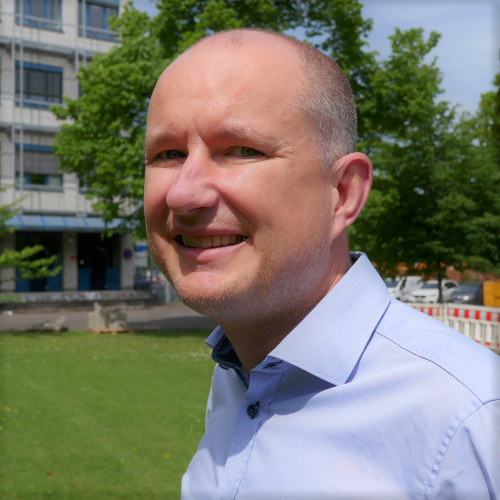
Prof. Dr. Peter Dannenberg
Geographisches Institut der Universität zu Köln
-
Albertus-Magnus-Platz 50923 Köln
Besuchsadresse: Otto-Fischer-Str. 4
50674 Köln (Südbau, Raum 2.12) - Telefon: +49-(0)221-470-1542
- Email: p.dannenberg@uni-koeln.de
- Website: http://www.geographie.uni-koeln.de/14177.html